Top 5 Digestive Enzyme Supplements In Australia Plus Why Most Of Them Start Working Far Too Late
Bloating after meals, heaviness that lingers into the evening, wind that arrives an hour after eating. We compared five popular Australian digestion products on enzyme coverage, herbal support, strain count, label honesty and value.
Almost nobody buys a digestion supplement because they read a study. They buy it because of how the two hours after dinner feel. When we looked at what Australian women say they want from a digestive product, the same short list came up again and again:
Comfort after a normal-sized meal, instead of undoing a button
A flatter, calmer feeling in the evening rather than a heavy, full one
Less wind and gurgling a couple of hours after eating
Regular, predictable transit without relying on something harsh
Being able to eat normal food — dairy, bread, beans, a big dinner out
Those are digestion outcomes, not bowel outcomes. That distinction matters more than almost anything else on this page, because the two most common products on the shelf are built for the second one.
Male Health Report compared five popular digestion products sold in Australia.
We looked for enzyme coverage across all food groups, herbal support for comfort, disclosed amounts, a routine simple enough to actually follow, and honest value per bottle.
Why Most Digestion Supplements Start Working Too Late
Here is the part the category rarely explains. Digestion is a sequence, and the sequence has a window.
Food is broken down in the stomach and upper small intestine. That is where enzymes do their work — splitting protein, fat, starch, fibre and lactose into pieces small enough to be absorbed. Whatever is not broken down in that window keeps travelling. By the time it reaches the lower bowel it meets bacteria, and bacteria ferment it. Fermentation produces gas. Gas produces pressure. Pressure is what people call bloating.
So the question is not "what settles my stomach afterwards" — it is "what happens to the meal in the first hour."
Most popular digestion products act after the window has closed. Probiotic-only capsules seed bacteria further down the tract. Fibre and bowel-support blends move what is already there. Peppermint and ginger formulas ease the sensation once the discomfort has arrived. All of those have their place. None of them help the meal itself get broken down.
Think Of It This Way
A probiotic is like hiring better staff for the end of the production line. An enzyme is like making sure the raw material arrives already cut to size.
If the problem is that food is sitting undigested, adding more staff at the end does not change what arrives.
Why 16 Enzymes Beats One Or Two
Plenty of products list "digestive enzymes" on the front and then disclose two or three inside — usually a protease and an amylase. That covers protein and starch. A normal Australian dinner is not protein and starch.
A roast dinner is protein, fat, starch and fibre. A pasta night adds gluten and dairy. A curry adds legumes and complex sugars. Each of those needs a different enzyme, and an enzyme only works on the food group it is built for. A protease will not touch lactose. An amylase will not touch fat.
This is why broad coverage matters more than a single large number. A formula with sixteen enzymes spanning protein, fat, carbohydrate, fibre, lactose and plant sugars covers a real meal. A formula with two covers part of one.
The 5 Things Every Digestion Supplement Must Get Right
Broad enzyme coverage — protein, fat, carbohydrate, fibre, lactose and plant sugars, not just one or two
Taken with food — an enzyme that arrives on an empty stomach has nothing to work on
Herbal support for comfort and transit — enzymes handle breakdown; botanicals help the rest feel easy
Probiotic strains for balance — useful as part of a formula, not as the whole strategy
Amounts on the label — no proprietary blend hiding how little of each is actually there
Common Label Tricks To Avoid
"Digestive enzyme complex" with no individual amounts disclosed
Huge billion-CFU numbers standing in for digestion support
Two enzymes on the panel and the word "complete" on the front
Bowel-moving herbs sold as though they are digestive enzymes
Small bottles priced as a month that run out in three weeks
What Makes Digestion Harder
No capsule outruns the basics. Eating quickly, eating late, large portions, alcohol with dinner, low water intake, and long stretches of sitting all make the same meal feel heavier. Stress matters too — digestion slows when the body is braced. The supplements below are meant to support a reasonable diet, not replace one.
Top 5 Digestive Enzyme Supplements In Australia
We compared each product on enzyme coverage, formula design, label transparency, convenience and value.
Our evaluation considered:
How many food groups the enzymes actually cover
Whether herbal support for comfort and transit is included
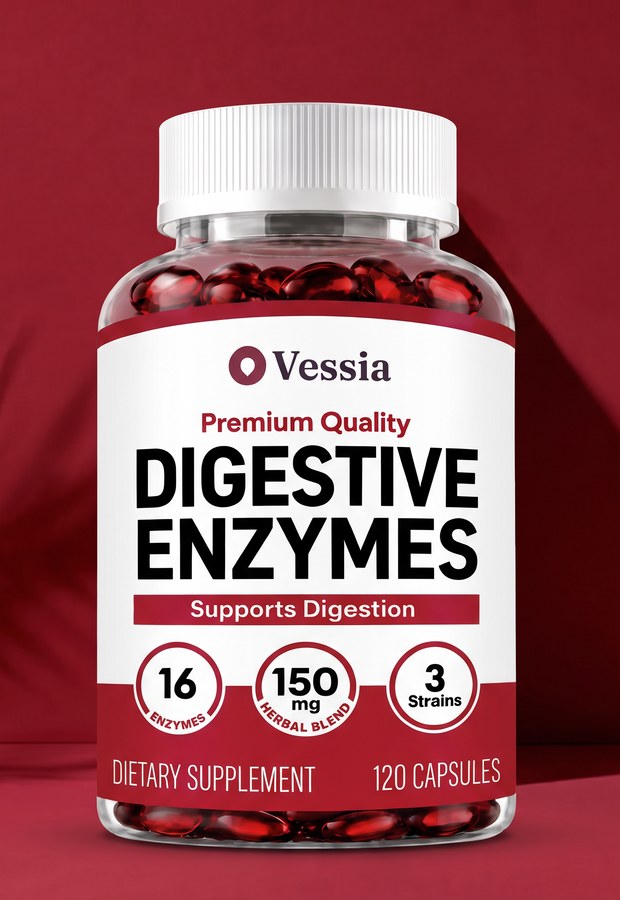
16 Digestive Enzymes: coverage across protein, fat, carbohydrate, fibre, lactose and plant sugars
150 mg Herbal Blend: added for bloat and gas comfort and regular transit
3 Probiotic Strains: balance included in the same capsule, not sold separately
Two-Month Supply: 120 capsules per bottle, two a day with a meal
Gluten Free, No Artificial Additives, Third-Party Tested
CONS
Must Be Taken With Food: no benefit if taken on an empty stomach
Sold Direct: not stocked in Australian pharmacies or supermarkets
Higher Upfront Price: it is a two-month bottle, not a small trial size
The Verdict:
Vessia takes the top spot because it is the only product in this comparison built around the breakdown window rather than around what happens afterwards. Sixteen enzymes cover the food groups in a real meal, a 150 mg herbal blend supports comfort and transit, and three probiotic strains handle balance — all in one capsule taken with food.
The Bottom Line:
Most shoppers end up with two or three bottles: an enzyme, a probiotic and something for bloating. This is the one formula that does all three jobs in the same serving, and the 120-capsule bottle lasts two full months.
Best For:
✅Anyone whose discomfort shows up an hour or two after eating
✅People who eat varied meals — dairy, bread, legumes, big dinners
✅Buyers who want one bottle instead of three
Not Ideal For:
❌Anyone with ongoing or severe digestive symptoms who needs medical assessment
❌People who want a fast-acting one-off fix rather than a daily routine
❌Anyone advised by a clinician to avoid probiotic strains
*Rankings reflect the Male Health Report comparison criteria and product information available at publication. Supplements are not intended to diagnose, treat, cure or prevent any disease.
Genuine Enzyme Formula: works in the breakdown window, not after it
Widely Available In Australia
Straightforward Daily Routine
Familiar, Long-Established Brand
CONS
Narrower Enzyme Range Than The Top Pick
No Probiotic Strains Included
60-Capsule Bottle: a one-month supply at best
Limited Herbal Support For Comfort
The Verdict:
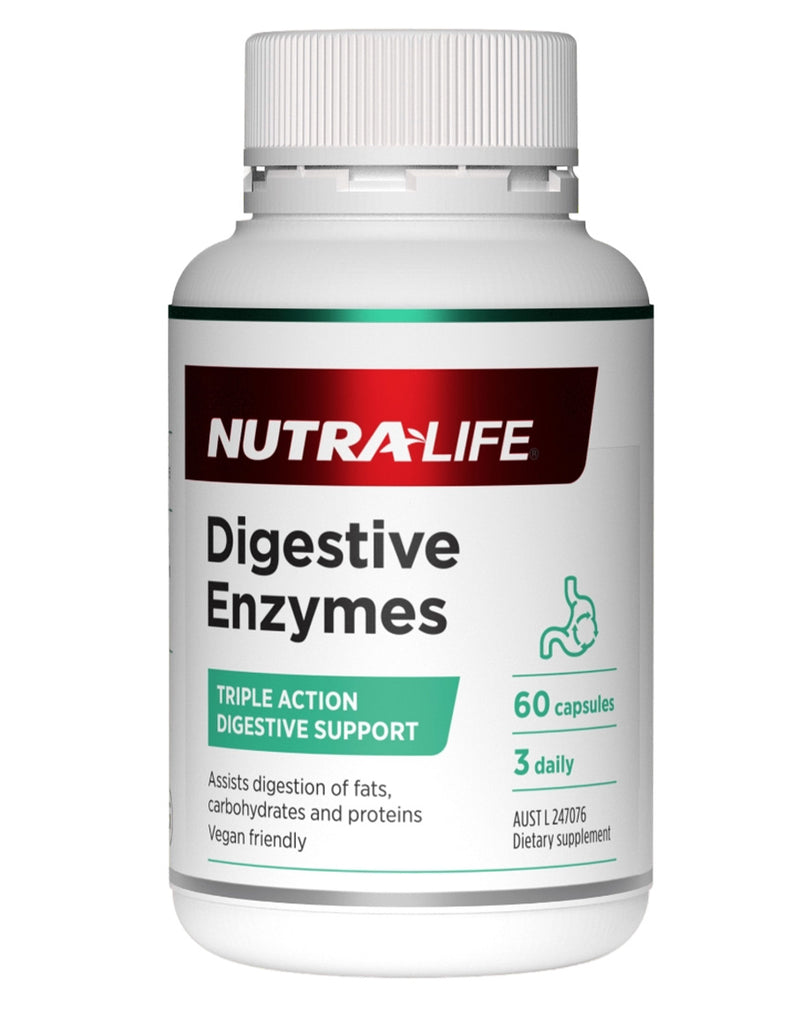
A solid, honest enzyme product and the closest thing here to the right idea. It targets the meal rather than the aftermath, which already puts it ahead of most of the shelf.
The Bottom Line:
Where it falls short is breadth. The enzyme range covers the common food groups but not the full spread, and there is no probiotic or herbal component, so anyone wanting comfort and balance ends up buying a second bottle.
Best For:
✅Shoppers who want an enzyme-only product from a familiar brand
✅Anyone trying enzymes for the first time
Not Ideal For:
❌People wanting enzymes, herbs and strains in one capsule
❌Buyers comparing cost per day across a two-month supply
*Rankings reflect the Male Health Report comparison criteria and product information available at publication. Supplements are not intended to diagnose, treat, cure or prevent any disease.
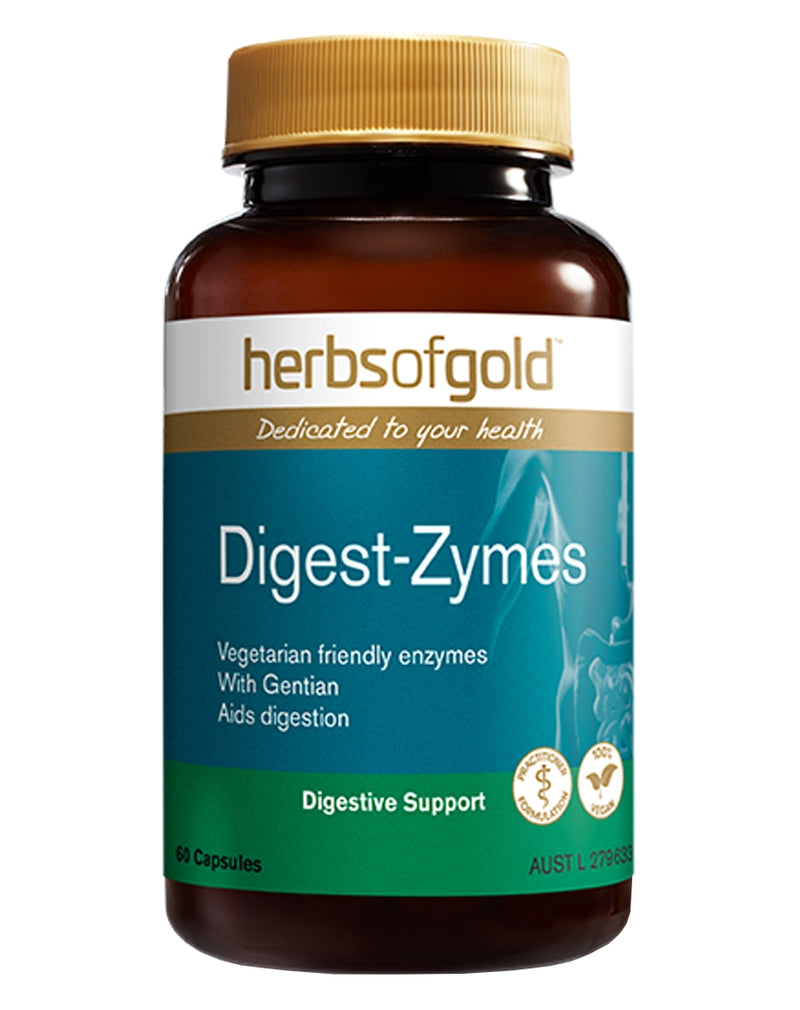
A well-made, clearly labelled enzyme formula with some botanical support. Nothing about it is misleading, which is more than can be said for parts of this category.
The Bottom Line:
It is a narrower version of the same idea. Fine for lighter meals; less convincing when the meal is mixed protein, fat, dairy and fibre all at once.
Best For:
✅People who prefer a practitioner-style Australian brand
✅Lighter eaters wanting gentle daily support
Not Ideal For:
❌Anyone wanting the broadest possible enzyme coverage
❌Shoppers consolidating three bottles into one
*Rankings reflect the Male Health Report comparison criteria and product information available at publication. Supplements are not intended to diagnose, treat, cure or prevent any disease.
Not Designed As A Complete Daily Digestion Formula
The Verdict:
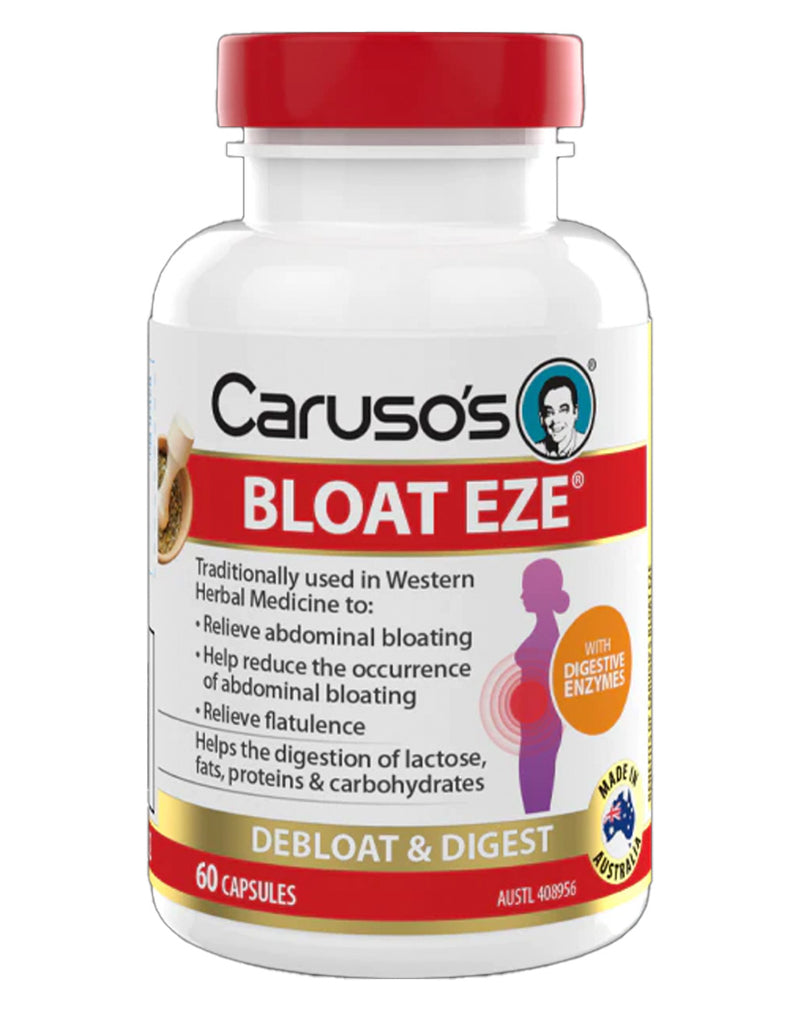
This is the category we described earlier: a product built to ease the sensation once discomfort has already arrived. That can be genuinely welcome, but it is a different job.
The Bottom Line:
Reasonable as occasional relief after a heavy meal. It does not change how the meal itself is broken down, so it sits below the enzyme-led options here.
Best For:
✅Occasional use after an unusually heavy meal
✅Shoppers who want something from a local pharmacy shelf
Not Ideal For:
❌Anyone looking for daily, meal-by-meal digestion support
❌People whose issue is undigested food rather than sensation
*Rankings reflect the Male Health Report comparison criteria and product information available at publication. Supplements are not intended to diagnose, treat, cure or prevent any disease.
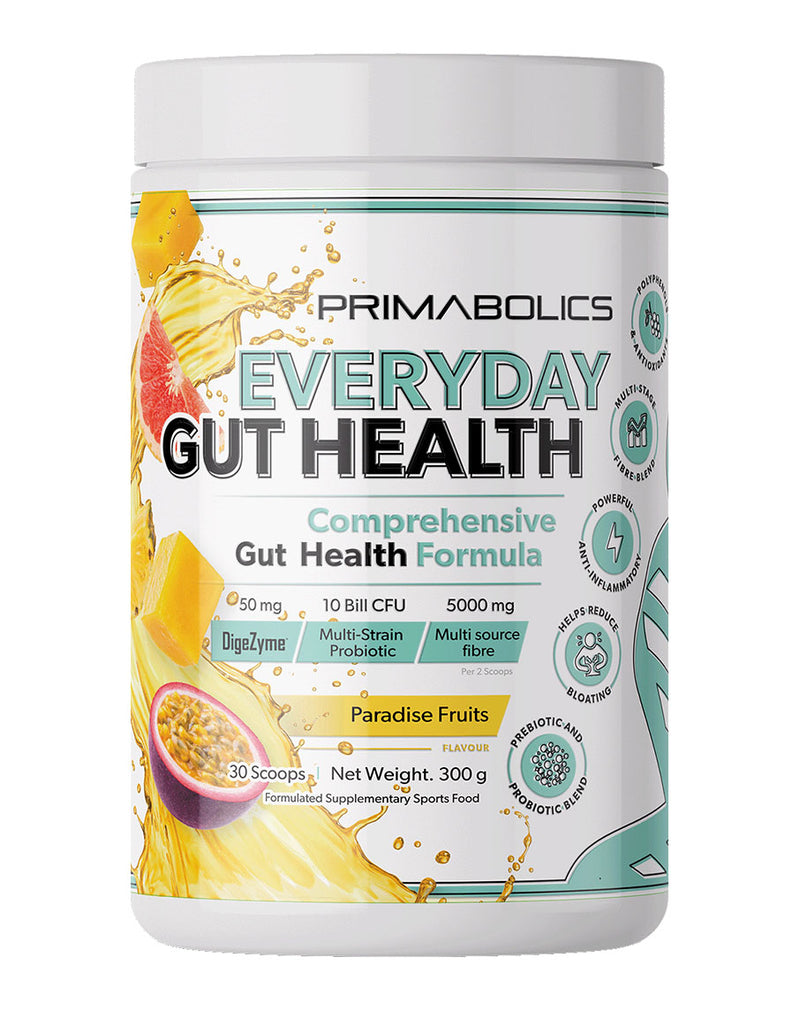
Not An Enzyme Product: works further down the tract
Powder Routine Is Harder To Keep Up With
Added Flavouring And Sweetening Ingredients
Does Not Address The Meal Itself
The Verdict:
A decent general gut product, and a fine thing to take. But it belongs to the "better staff at the end of the line" category rather than the "cut the raw material to size" one.
The Bottom Line:
If bloating shows up shortly after eating, a fibre-and-strain powder is unlikely to be the lever that moves it. Worth having alongside an enzyme formula, not instead of one.
Best For:
✅People building general gut balance over time
✅Anyone who prefers a drink to a capsule
Not Ideal For:
❌Post-meal heaviness and wind
❌Shoppers specifically looking for digestive enzymes
*Rankings reflect the Male Health Report comparison criteria and product information available at publication. Supplements are not intended to diagnose, treat, cure or prevent any disease.